
i am fully aware i haven't blogged in well over two months. maybe i'm getting better at managing my anger, and have less of a need to blog? heh. well anyways, yesterday i hit the motherlode, if you will, as far as things that make me angry enough to rant about for pages. its called the motherlode blog on the new york times. or more specifically, this post by guess blogger "nicole sprinkle" (more on ludicrous last names in a bit).
so to summarize as briefly as possible. this is an "essay" (scare quotes to indicate that its neither well-written nor well-argued) by a white woman who married a colombian man, had a child, and began to systematically destroy her child's life by filling her with self-loathing. or, to put it in the words of so many of the commenters on the blog, it is a "brave and courageous" essay which takes an "honest" look at race, and should be applauded. apparently now the standard for decency when it comes to race relations is something along the lines of "i'm a huge fucking racist, but as long as i admit it, i'm being progressive." die.
ok i digress. so i was originally planning on just pointing out some of the horrifyingly racist things the author throws out in this essay as though they're no big deal (hoping her child will be just hispanic enough to get a scholarship, exoticizing her american-raised husband by expecting him to speak to their child in only spanish, worrying about the negative effects dominican nannies might have on her child's upper-class development, etc etc etc barf). As i went through the blog listing "things i found terribly offensive," though, the list grew so long i began to suspect i might be there forever. so i'm scratching that, and i'm just going to try to make a very broad point about this essay, and the incredible sadness i feel for this poor, poor child.
the main point of this essay, and the crux of my anger, is the idea that as a wealthy, white, straight parent, you are within your rights to try to mold your child's life to look more like your own to 'protect them' from adversity. Parents want their children to be happy, and for some reason they think the only road to happiness is the one lined with silver spoons which they themselves traveled. I doubt there are any such parents reading this right now, but i'll throw out some advice anyways: your child will never be happy if she knows her parents only love the white part of her, the straight part of her, or whatever other part they might most identify with. This "Sprinkle" woman (henceforth known as Cupcake McWhitey) seems to think that if she micromanages every aspect of her child's development, teaching just enough spanish to be charming and exotic, but not enough that anyone would question her whiteness, not enough that anyone might EVER discriminate against her, her child will have a great life. this is incorrect. if no one ever discriminates against her, that child will have a terrible life because she will grow up to be a person of color who is completely unaware of the racism that permeates the society in which she lives. this is tragic, because it means she won't CARE, and won't contribute to changing society in a positive way. it is also dangerous, because it means she won't be aware of the potential that someone WILL eventually discriminate against her. since of course, despite her mother's best efforts, she will still NOT BE WHITE.
i don't know that many new mothers, but i have known one too many gay friend whose parents rejected their gayness because they don't want their child to have any more hardship in life. parenting fail. in a big way. the moral of the story is, you can't change who your child is, but as a parent it is your responsibility to raise that child not to be the person you wish they were, but to be healthy and happy being the person they are. obviously raising a healthy and happy child is hard work, but if you can't even attempt to do that, you really should not have had children.
Showing posts with label society. Show all posts
Showing posts with label society. Show all posts
Friday, April 10, 2009

Wednesday, February 4, 2009
marriage is between a man and a woman
but beyond that, no holds barred. feel free to use your legal privileges as a straight person to launch yourself into reality tv mediocrity. its the american dream.
CBS has just announced their newest reality show, "Arranged Marriage." in the show, four couples, chosen for one another by their families, will actually legally get married and the show will follow those marriages and see how they turn out. what i'm getting out of this? letting gay people get married would pretty much destroy the fabric of our society, cheapen our family values, and bring about the End of Days with some dramatic rains of fire. but straight people should feel free to use marriage as a publicity stunt, a joke, a fun activity in vegas (don't worry, you can always just cancel it when you sober up!) and whatever the f*ck else they want. sounds about right. as long as the people involved are of opposite genders, its a positive addition to American culture, and jesus will in no way be upset. score one more point for reason and rationality.
CBS has just announced their newest reality show, "Arranged Marriage." in the show, four couples, chosen for one another by their families, will actually legally get married and the show will follow those marriages and see how they turn out. what i'm getting out of this? letting gay people get married would pretty much destroy the fabric of our society, cheapen our family values, and bring about the End of Days with some dramatic rains of fire. but straight people should feel free to use marriage as a publicity stunt, a joke, a fun activity in vegas (don't worry, you can always just cancel it when you sober up!) and whatever the f*ck else they want. sounds about right. as long as the people involved are of opposite genders, its a positive addition to American culture, and jesus will in no way be upset. score one more point for reason and rationality.
Thursday, October 23, 2008
term limits and protests
so city council voted today to extend term limits so king bloomberg can get a third term. feel free to ponder that, while you also ponder the following: as with any event, major or minor, this elicited a protest outside city hall. but whereas the past few days the park has been filled with black and brown people protesting for better schools and better health care, today was white professionals in suits, still working via blackberry while protesting term-limit legislation. fascinating.
Tuesday, October 7, 2008
Entitlement Gone Wild!!!
(subtitle: why I can’t live in Park Slope, and why no one should read online comments)
As promised, another blog post within literally days of the last one. Don’t get spoiled, though. You never know when I might get lazy again.
Anyways, let’s start out with some news/bragging: I recently moved out of park slope and into bed-stuy. And I literally couldn’t be happier about it. I’m sure I’m romanticizing the whole situation (it’s still new york, after all), but the fact remains that my first morning at my new place, I walked out the front gate and a passer-by said “good morning” to me. Shocking! Unheard-of! By the end of the week I had been introduced to not one, not two, but SIX of my neighbors. Who smile at me on the street, and sometimes talk to me on the subway. I’m in heaven. Which, of course, brings me to my current topic: hell. AKA park slope, Brooklyn.
I know what you’re going to say – hating on park slope is SO last season. But I say last season’s not all that long ago, and I don’t think the issue was properly addressed back then. Let’s quickly go over the typical reasons people might hate on park slope: it’s overpriced, over-gentrified, and full of self-righteous yuppie parents who want to turn the whole neighborhood into a playground for their entitled little children. It’s full of strollers, puppies, yuppies, and gays, all of whom will judge you on the street for not being one of them. True. But let’s “unpack” that, shall we?
There are a lot of reasons to hate park slope, some legitimate, some not. An example of “not” legitimate would be “I hate puppies.” No one hates puppies. Your argument doesn’t hold water. Similarly, no one hates good food. People do, however, hate overpriced good food. Which leads us to gentrification. The complaints about gentrification, and specifically the complaints about the attitude of park slope residents, get to the heart of the issue I want to discuss here: the false sense of entitlement that seems to permeate every aspect of white middle class culture these days (and not just in park slope. I guess this isn’t just about hating on park slope after all). Trust me, if anyone knows about the sense of entitlement today’s 30-somethings and soon-to-be 30-somethings seem to have, it’s a former Harvard student. I survived that, so now I consider myself to be somewhat of an expert, and in a fine place to talk about it on a larger scale: New York.
A recent Village Voice article prompted me to start thinking about this topic yet again. I of course recommend that you read the whole article (it’s very illuminating), but I’ll summarize it briefly here for your convenience: A well-off young Manhattan couple, with the help of some friends, purchased a building in prospect heights (just north of park slope, for you non-New Yorkers) at a price that was significantly under market value due to the fact that there were several rent-stabilized apartments in the building. They then began evicting, one by one, each of the rent-stabilized tenants (four families, to date) so that they could convert their own dwelling into a 20-room home. Only one of the rent-stabilized tenants remain, and the two parties are currently involved in a legal battle over her eviction. The current tenant, Evelyn Suarez, has been living in the apartment for 28 years and currently shares it with her boyfriend, her son, and two young nieces. She pays $402/mo for an apartment that most likely would rent for somewhere around $1800/mo if it was new to the market today. Various factors have been thrown around as arguments for one party or the other, including the fact that Ms. Suarez is unemployed, the fact that she has colon cancer, and the fact that the apartment is slated to be turned into storage space for the new owners.
Needless to say, the issue has blown up. There was a “block party” to raise awareness about it a while back, and something about a councilwoman speaking out against the landlords. Obviously there was a Village Voice article about it. More interesting, I think, is the reaction on the Brownstoner real estate blog (a blog heavy in park slope readership). I don’t want you to have to go through the painful process I did of reading every single comment, so I’ll just pick out some of the best ones for you (I’m sparing you the comments on the Village Voice website because, frankly, some are too racist to re-print):
And of course, my favorite:
I’m going to resist the temptation to point out the myriad flaws in each of those posts individually, but I will point out that I think these posters and I have some disagreement over the meaning of the word “entitlement.” Because my argument is that at the end of the day, that’s exactly what this all comes down to. Entitlement, which dictionary.com unhelpfully defines as “the state of being entitled,” is a word I would define as “a belief that one is deserving of some benefit or advantage.” By definition, then, people who are DISadvantaged (aka people who can’t afford to pay market value for their apartment, perhaps) cannot really exhibit a “sense of entitlement.” People who do have certain social privileges and advantages, though (i.e. wealth), such as the type of person who might spend their free time reading a New York real estate blog, can and do exhibit a “sense of entitlement,” and nowhere is it more apparent than in their reactions to public outcry against injustice.
As you can see from the comments above, posters on the whole reacted in a number of fairly predictable ways, such as attributing all poverty to laziness rather than disadvantage; displaying indignance that anyone might want to deny the landlords the house of their dreams; decrying rent stabilization, welfare, and other forms of social programming as unfair to the hardworking middle class; painting themselves as ‘the victim’ by self-labelling as working class while simultaneously talking about working-class neighborhoods in a way that OBVIOUSLY indicates an unfamiliarity with them; and throwing up their hands with the argument that life is unfair, there’s nothing any individual rich person can do about it. In other words, entitlement. To acknowledge that not everyone has access to the resources necessary to lift themselves out of poverty, much less afford the down payment on a New York home, would be to acknowledge that you, as a New York homeowner, have in some way benefited from an advantage you did not earn. Which would mean you should be feeling guilty, which is not something you do feel/want to feel, so the whole thing must be bullshit. It’s the same reason people don’t like to talk about white privilege, male privilege, or any other types of privilege that generally seem to make our society uncomfortable. No one wants to be the bad guy.
The thing is, we live in a society with a whole long history of oppression, injustice, and general inequality. Which has, of course, led to an uneven distribution of resources and privileges. You can either deny that, and in so doing perpetuate it, or you can acknowledge it and try to change it. The reason I can’t move back to park slope: no one wants to acknowledge it. People who are well-off enough to be able to afford a neighborhood full of no one but their peers get a free pass to stop thinking critically about their place in society, and a sense that they’re entitled to all the comforts they desire, no matter the cost to people less fortunate than themselves. It’s that sense of living among people wholly unaware of their own privilege and content in that fact that makes me so uncomfortable in Park Slope, the Upper East Side, the Upper West Side, etc. It’s definitely not the puppies. I love puppies.
As promised, another blog post within literally days of the last one. Don’t get spoiled, though. You never know when I might get lazy again.
Anyways, let’s start out with some news/bragging: I recently moved out of park slope and into bed-stuy. And I literally couldn’t be happier about it. I’m sure I’m romanticizing the whole situation (it’s still new york, after all), but the fact remains that my first morning at my new place, I walked out the front gate and a passer-by said “good morning” to me. Shocking! Unheard-of! By the end of the week I had been introduced to not one, not two, but SIX of my neighbors. Who smile at me on the street, and sometimes talk to me on the subway. I’m in heaven. Which, of course, brings me to my current topic: hell. AKA park slope, Brooklyn.
I know what you’re going to say – hating on park slope is SO last season. But I say last season’s not all that long ago, and I don’t think the issue was properly addressed back then. Let’s quickly go over the typical reasons people might hate on park slope: it’s overpriced, over-gentrified, and full of self-righteous yuppie parents who want to turn the whole neighborhood into a playground for their entitled little children. It’s full of strollers, puppies, yuppies, and gays, all of whom will judge you on the street for not being one of them. True. But let’s “unpack” that, shall we?
There are a lot of reasons to hate park slope, some legitimate, some not. An example of “not” legitimate would be “I hate puppies.” No one hates puppies. Your argument doesn’t hold water. Similarly, no one hates good food. People do, however, hate overpriced good food. Which leads us to gentrification. The complaints about gentrification, and specifically the complaints about the attitude of park slope residents, get to the heart of the issue I want to discuss here: the false sense of entitlement that seems to permeate every aspect of white middle class culture these days (and not just in park slope. I guess this isn’t just about hating on park slope after all). Trust me, if anyone knows about the sense of entitlement today’s 30-somethings and soon-to-be 30-somethings seem to have, it’s a former Harvard student. I survived that, so now I consider myself to be somewhat of an expert, and in a fine place to talk about it on a larger scale: New York.
A recent Village Voice article prompted me to start thinking about this topic yet again. I of course recommend that you read the whole article (it’s very illuminating), but I’ll summarize it briefly here for your convenience: A well-off young Manhattan couple, with the help of some friends, purchased a building in prospect heights (just north of park slope, for you non-New Yorkers) at a price that was significantly under market value due to the fact that there were several rent-stabilized apartments in the building. They then began evicting, one by one, each of the rent-stabilized tenants (four families, to date) so that they could convert their own dwelling into a 20-room home. Only one of the rent-stabilized tenants remain, and the two parties are currently involved in a legal battle over her eviction. The current tenant, Evelyn Suarez, has been living in the apartment for 28 years and currently shares it with her boyfriend, her son, and two young nieces. She pays $402/mo for an apartment that most likely would rent for somewhere around $1800/mo if it was new to the market today. Various factors have been thrown around as arguments for one party or the other, including the fact that Ms. Suarez is unemployed, the fact that she has colon cancer, and the fact that the apartment is slated to be turned into storage space for the new owners.
Needless to say, the issue has blown up. There was a “block party” to raise awareness about it a while back, and something about a councilwoman speaking out against the landlords. Obviously there was a Village Voice article about it. More interesting, I think, is the reaction on the Brownstoner real estate blog (a blog heavy in park slope readership). I don’t want you to have to go through the painful process I did of reading every single comment, so I’ll just pick out some of the best ones for you (I’m sparing you the comments on the Village Voice website because, frankly, some are too racist to re-print):
“These renters could have purchased property but did not. Tough luck.”
“Why should folks who don't want to work be able to live off welfare in rent controlled privately owned housing? It's frigging nuts!”
“is it immoral to eat as much food as we eat in America while folks in Darfur starve?
everytime you go to grocery store to buy that big steak, the politicians should picket infront of the store so you feel guilty that someone who doesn't have the money to buy the steak can't have any.”
“I bought when I had no money, and did it as a single working class female by(1) saving every cent I otherwise would have paid in rent for eight years when I had a stabilized apt in Manhattan and (2) buying in a neighborhood that none of my friends would visit. I had to fight banks to get a mortgage, since the neighborhood was still redlined. It was called Clinton Hill. My parents wept and my friends said I'd be dead in a year.”
“This is retarded. The problem with long term rent control is it gets people used to living in areas they realistically cannot afford to. Another way of looking at it is rent control removes a major incentive to improve your lot in life through hard work and sacrifice: financial stress.
The guy who lived there for 17 years and didn't bother to learn English...gee, I wonder why he's not rolling in money right now? Must be the rich peoples' fault. They're so cold and heartless.
My view? Don't punish achievers (like the buyers) and don't coddle losers (like at least some of the tenants). Give the tenants their Section 8 housing and be done with it.”
And of course, my favorite:
“The sense of entitlement that is rampant throughout the city has no limits. Why are these people so special that they should prevent someone who has spent tons of hard earned money from using their own space exactly as they wish.
Rent stabilized units are an incredible perk that most of us will never enjoy. Be happy you enjoyed it while it lasted and respect people's rights to their own property!”
I’m going to resist the temptation to point out the myriad flaws in each of those posts individually, but I will point out that I think these posters and I have some disagreement over the meaning of the word “entitlement.” Because my argument is that at the end of the day, that’s exactly what this all comes down to. Entitlement, which dictionary.com unhelpfully defines as “the state of being entitled,” is a word I would define as “a belief that one is deserving of some benefit or advantage.” By definition, then, people who are DISadvantaged (aka people who can’t afford to pay market value for their apartment, perhaps) cannot really exhibit a “sense of entitlement.” People who do have certain social privileges and advantages, though (i.e. wealth), such as the type of person who might spend their free time reading a New York real estate blog, can and do exhibit a “sense of entitlement,” and nowhere is it more apparent than in their reactions to public outcry against injustice.
As you can see from the comments above, posters on the whole reacted in a number of fairly predictable ways, such as attributing all poverty to laziness rather than disadvantage; displaying indignance that anyone might want to deny the landlords the house of their dreams; decrying rent stabilization, welfare, and other forms of social programming as unfair to the hardworking middle class; painting themselves as ‘the victim’ by self-labelling as working class while simultaneously talking about working-class neighborhoods in a way that OBVIOUSLY indicates an unfamiliarity with them; and throwing up their hands with the argument that life is unfair, there’s nothing any individual rich person can do about it. In other words, entitlement. To acknowledge that not everyone has access to the resources necessary to lift themselves out of poverty, much less afford the down payment on a New York home, would be to acknowledge that you, as a New York homeowner, have in some way benefited from an advantage you did not earn. Which would mean you should be feeling guilty, which is not something you do feel/want to feel, so the whole thing must be bullshit. It’s the same reason people don’t like to talk about white privilege, male privilege, or any other types of privilege that generally seem to make our society uncomfortable. No one wants to be the bad guy.
The thing is, we live in a society with a whole long history of oppression, injustice, and general inequality. Which has, of course, led to an uneven distribution of resources and privileges. You can either deny that, and in so doing perpetuate it, or you can acknowledge it and try to change it. The reason I can’t move back to park slope: no one wants to acknowledge it. People who are well-off enough to be able to afford a neighborhood full of no one but their peers get a free pass to stop thinking critically about their place in society, and a sense that they’re entitled to all the comforts they desire, no matter the cost to people less fortunate than themselves. It’s that sense of living among people wholly unaware of their own privilege and content in that fact that makes me so uncomfortable in Park Slope, the Upper East Side, the Upper West Side, etc. It’s definitely not the puppies. I love puppies.
Sunday, October 5, 2008
Dr. Dumbass, or How we Learned to Stop Worrying and Love the Hockey Mom

Alright, before I get into the post I recognize that I probably owe you some sort of “explanation” for my long absence from blogging. Its like this: as you may know, we started this blog because there’s a lot of really f*cked up shit happening in the world that makes us mad. Hence the tagline “we rage, so you don’t have to.” Blogging is actually a really great way of channeling some of that rage into slightly less negative energy, I’ve found. But recently, what with the presidential campaign heating up and the economy spiraling down the drain, there’s just been so much to rage about its hard to make a coherent sentence. So I’ve been reading a lot, writing…not so much.
BUT good news: I’m back. Time to channel all that rage into something productive again. If things go well, expect this to be the first in a series of blog posts that are NOT weeks apart from each other. And I apologize in advance: they may be lengthy. The topic of this one: well, the title says it all, I think.
Ok so down to business:
The remarkable and terrifying ascent of Sarah Palin to the national stage is so problematic in so many ways that I could probably write quite literally a hundred separate blog posts about it. There’s the sexism, the republicanism, the global warming, the foreign policy, the fucked up campaigning, the terrifying ambition, the cold heartless and oh-so-creepy way in which she responded to gwen iffil’s question about “what if the worst were to happen,” the accent that I think she may be exaggerating…seriously, the list goes on for miles. But today I’d like to focus on just one issue, and this is one that is not entirely Sarah Palin’s fault, although she’s surely not helping. I call it the war on intelligence.
This has been a common theme in politics for frankly as long as I can remember, but now that I’m old enough to care, I have to point out that it’s getting dangerous. The idea that it’s more important for a candidate to sell him/herself as likeable, and “average,” than it is to provide policy recommendations and prove him/herself knowledgeable in areas of domestic and foreign policy is deeply, deeply troubling, and nowhere is it more clear than in the Republican Party's marketing of Gov. Sarah Palin.
As Palin quite literally can’t seem to stop saying, she’s a “Washington outsider,” a “hockey mom,” and all those other run-of-the-mill, joe six-pack type terms that, when overused, can turn a vice presidential debate into a disastrous drinking game. Say it ain’t so, joe! Doggone it, she’s gone just a little overboard trying to be folksy and down-home. But my real problem with this is not how f*cking annoying she gets when she says “you betcha” for the ten millionth time, its that people actually LIKE this shit. People enjoy it when she replaces substance with fake authenticity. And yes, I realize that’s an oxymoron. at least i know what an oxymoron is.
As Barack Obama would say, “let’s be clear:” I understand why people want a president or vice president they can relate to. You want someone who you think you can trust to share your values. You want someone who appears to have respect for people like yourself, because if they don’t respect you, they may not have your best interests in mind. I get that. I agree with it. But that’s no longer what this is about. With Sarah Palin, you’re not getting a politician you can relate to, you’re getting a politician who IS you. And YOU are not qualified to run this country.
I think it was Maureen Dowd, shockingly enough, who verbalized it so well in a mock-conversation (god, she loves those) between Barack Obama and President Bartlett from The West Wing. Bartlett, in Dowd’s column, says, “Elite is a good word, it means well above average. I’d ask them what their problem is with excellence.” That’s just it. What in the name of all that is holy is everyone’s problem with excellence? Relatability is important, but more important, I want the person or persons I elect to office to be intelligent. I want someone capable. I want someone who understands economics better than I do, not someone whose confusion reminds me of my own and evokes my empathy. I want someone whose foreign policy plan would consist of something more than not second-guessing Israel. Sure, I want someone who reads the newspaper often enough to know which newspapers she reads, but that’s setting the bar a little low, no? I’d rather have someone who reads several newspapers and understands the nuance of what she reads. I’d rather have someone who not only understands economics better than I do (another seriously low bar), but understands economics well enough to handle the current crisis. I’d rather have someone excellent.
Running the country is a big job. Its one that I, after four years at an “elite” college, am in no way qualified to do. I would hope that the people who are actually campaigning for the job would have an interest in proving to me that they, in fact, know more than I do. But instead, the Republican Party seems intent on proving that they’re exactly like me. Worse, they seem intent on proving that I, with my Ivy League education, my love for arugula, and my newfound ability to pronounce Ahmadinejad, am “elite,” and that they are even more “average,” which in their twisted world means “better.” *I* recently injured myself trying to hang a picture on my wall. I like to dream that come January, our country will be led by people who pride themselves in being smarter than me.
To be honest, the really troubling part about all of this is the fact that I think we all know by now it’s not just the presidential election. The war on intelligence has permeated most aspects of American life. Being smart is just not cool. Our public education system is terrible, but being a champion of education will not get you terribly far politically. Creativity is excessively undervalued in this country, and, whether it is an accurate representation or not, the image of the “average American” that is being put forward by politicians is one of an unambitious, hard-working, not terribly bright, white man who likes beer and hunting, loves his family, and has no interest in politics outside his home town. My suspicion is that very few people actually relate to that characterization of the “average American.” The idea that white Americans living in small towns across the U.S. care about nothing other than working 9 to 5 and getting health care is frankly insulting: my suspicion, and by all means correct me if I’m wrong, is that people all over America have diverse interests beyond their basic human needs, and that given the opportunity to give their children a better education, no one would turn it down because it’s “elite.” So enough of this nonsense. I say we fight back and say “no” to mediocrity. And while we’re at it, dear god can we please say “no” to Sarah Palin?
Ok, I'll leave you for now, but here are just a few things I feel compelled to share with you, that I couldn't quite work into the post:
a great op-ed in salon on media reactions to palin
and this:
that's all, folks!
Tuesday, August 26, 2008
Review: Trouble the Water
Friday night I was all ready to settle into some television and a slice of pizza when one of my roommates forced me to get up off my butt and head downtown to the IFC Center to see the opening screening of a film called Trouble The Water. Reluctantly I went (I can be really lazy- I was tired!) but fortunately was incredibly grateful that I did.

The film, executive produced by Danny Glover (who was there! He was standing in my way as I tried to sneak in some outside food lol), follows a trio of Hurricane Katrina survivors who lived through the storm and are attempting to rebuild their lives in its environmental, social and economic aftermath. TTW uses footage taken by the documentary makers, clips from news channels/speeches and home video caught by one of the main subjects of the film, Kimberly Rivers Roberts.
Roberts, her husband, and a friend (encountered during Katrina) return to New Orleans two weeks after the storm to find their homes destroyed. Unlike what you'd expect, TTW doesn't just talk about how much of a failure the infrastructure our government's disaster relief groups were, but it brings life to the fact that the people whose lives were most devastated by the storm were already dealing with life-threatening situations, drug abuse, death and financial instability. Kim's mother died of AIDS, both she and her husband were former drug dealers who were failed by the public education system, their friend Brian is a former addict, they have no bank account and- like so many others- couldn't leave New Orleans because they simply did not have the means.

Trouble The Water not only reminds us of what happened during Katrina (as well as the fact that the US Government cares very little about the impoverished minorities crowded in its urban centers) but brings to light the fact that the sicknesses exacerbated by Katrina in New Orleans and the Gulf Coast (poverty, poor public education, drug use, STIs and STDs, violence, abuse) not only existed before the storm, but are still here and will be here long into the future unless we take some sort of action. If there's only one word I could use to describe this film, it would be:
Real.
I strongly urge you to go if it's playing in your city- click here to find information on screenings and openings.
Tuesday, June 24, 2008
the best and the brightest (aka you're not special)
a recent new york times article sent me on a journey of mental self-discovery - mostly made up of complaining to anyone who would sit still about how pissed off i was about the whole affair. so maybe "self-discovery" is a bit of a stretch. even so.
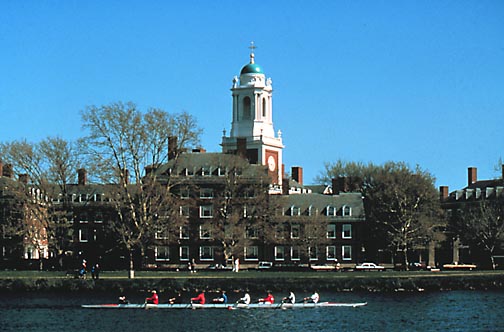
the topic: a so-called 'elite' education, and what that means to the individuals who go to schools such as harvard and yale. the times article asks the question "why are so many ivy-league graduates going to wall street?" the article fails to really answer that question because, like so many articles in the times of late, it is poorly-researched and has little to no structure. too harsh? suck it, times. teach your writers to use this crazy thing i call a "transition." research would also not hurt, while you're at it. the writers basically selected seemingly at random a handful of harvard seniors whose main similarity seems to have something to do with how much they enjoy hearing themselves talk to, shockingly enough, talk about their struggles to do something different from the hedge funds and i-banking all of their friends are going into. the writers did not, of course, interview anyone from any of the public service organizations on campus. one of the students in the audio slideshow segment actually had, as his plans for the coming year, NOTHING. i think that was supposed to inspire me to be bold like him and not sweat the whole 'job' thing, but i'm guessing he has someone else paying his rent while he does the whole "i'm too deep to be corporate and too rich to get a job like you commoners" thing.
i digress. i'm not actually here to rant about what a shitty job the times does of researching for articles, or the questionable merit of their interview subjects. the basic question still stands, and i think a few other people have done a better job of answering it than the times did, so i'd like to share some thoughts with you.
William Deresiewicz, in a better article (admittedly long, but i think worth it) starts out a bit awkward with an attempt to blame his own lack of social skills on yale, but goes on to turn that uncomfortable anecdote into a pretty interesting analysis. he talks about the constant repetition that you are the best and the brightest, the elitism at every turn, the vast amount of support you get from the institutions, and the notion of "entitled mediocrity." read the article for the nuance, but the main points i think are twofold:
1) entitlement: going to a school like harvard teaches you that you DESERVE to do a shitty job and still get an A, you DESERVE a six-digit starting salary your first year out of college, and you DESERVE all the praise you get. even more, you deserve those things because of something innate within yourself - that you got where you are because you really are the best, and not because of any privileges you may have had along the way. and most people, by the time second semester of freshman year rolls around, have begun to completely take every benefit they get for granted to the point that they would readily argue that an A- in a class they worked hard in proves there is no grade inflation, and that 3-week extension they got on a paper because they got sick is in no way out of the ordinary. by the time you graduate, your grip on reality has a 3.5 year head start, and you'll probably never recapture it.
2) expectations: harvard grads, and the parents of harvard grads, seem to expect not so much the development of the mind, as Deresiewicz puts it, but of the career. specifically, a high-paying corporate career. Deresiewicz calls it a lost opportunity, barack obama calls it a 'poverty of ambition.' it all amounts to the same thing: in a part of the world where you can afford to do pretty much whatever you want and still live a comfortable life, the "best and the brightest" don't consider 'anything you want' to be within the realm of acceptable careers. i know literally one person who did the teaching certification program through harvard, even though i knew tons of people who loved teaching and wanted to teach - my theory: you don't want to look as though you're "wasting" your ivy-league education on something you could have learned for less money. you don't want to look as though you failed to be all you can be. and while you're trying so hard not to fail, you're failing to realize that you're wasting your education instead on a career path that only requires you go through the motions: take test prep classes and AP classes in high school, get into an ivy league school, take uninteresting but easy classes to keep your gpa up, do e-recruiting for a major consulting firm, start in on a career you had never even heard of before you got to college, and that requires absolutely none of the education you had available to you but probably didn't take advantage of in your four years of college. talk about failure.
in the context of this discussion, jk rowling's recent commencement address seems pretty relevant. in her speech, on "the fringe benefits of failure," she explained that if she had not failed to succeed on the path chosen for her by parents, school, etc., she would never have had the courage to try doing what it was she actually wanted to do. and to me, that's the real answer to the question posed by the times. why are so many ivy-leaguers going to wall st? because it's ridiculously easy. you can get an entry-level job at an investment bank or a consulting firm with literally no knowledge at all, they'll train you on the job, and then pay you an absurd amount of money to just continue on the path they've set you on. once you're in, it's difficult to fail. whereas not taking that job forces you to think about what you actually might want to do, and in the process of trying to figure that out, more likely than not you'll realize your harvard education didn't prepare you for it (either that or you wasted your harvard education trying to fit in with future i-bankers and now its too late to go back and take that class at the school of public health), and you're no better-equipped to live your dream than you would be if you had gone to a different school. basically, you're not special, you're young, and you have a lot to learn. and coming hard on the heels of "you're the best and the brightest," "you're not special" just doesn't have that same magical ring. most people don't want to hear it.
so they don't hear it, they go get that i-banking job they've never dreamed of, and if they take the time to read shit like my blog, they get indignant because they have about 25 ready-made rationalizations for why i-banking was the career that made the most sense to them (and strangely enough, everyone they know). poverty of ambition is actually the perfect term for this. if i ever meet barack, i'll have to thank him for that.
anyways, to end this needlessly long post on a happy note, big shout out to all my people who are doing, or in the process of finding, whatever it is they want to do. there's a lot of those people too, and no one ever writes an article about them. dag.
Sunday, May 18, 2008
smile for the colonizer

so one of my friends called me today with a story (calm down, this is not just frivolous: i have a point to make here). I am going to relay that story to you. then i'm going to relay a story of my own. then i'm going to bitch about both of them, and if we're all lucky, i'll come to some sort of conclusion. ok, so now that you have an outline, let's begin:
Story 1: two of my friends (both black) were having brunch at a restaurant in harlem. a few tables over was a french couple taking a break from their bike tour of the city, very excited to be in historic harlem! there was no one sitting in between them. In my friend's words,
"a mariah carey song came on. it might have been vision of love. (friend 1) put his hand up in the air, and i started to do a little jig in my chair. next thing you know, this french woman LEAPS out of her chair and snaps a picture of us."
dang. and of course, the french woman thought nothing was wrong, and was THRILLED to have gotten a picture of the harlem natives, celebrating their people's music over sunday brunch.
Story 2: i was recently in India on a work trip (i like this story already because it misleads the reader into thinking i have a job that pays me enough to live in this crazy city). It was just me, my boss, and someone we shall henceforth refer to as "the colonizer," even though technically my boss is british, and she is not. anyways, we were in this like, for lack of a better word, botanic garden (long story. it was made mainly of rocks.), and we had stopped to take pictures by a waterfall. the colonizer took a lot of pictures, we milled around for a while, and then got ready to move on. as we were leaving that particular area, we passed by two indian children splashing in the water. their mother and father were nearby, and the father was trying to get them to hold still for a picture. my boss commented that it was going to be a cute picture, and the colonizer, agreeing and giddy with excitement, ran up and snapped a picture of the children. as the mother turned her shocked face towards the colonizer, i quietly fled the scene and pretended like i was not traveling with anyone that day.
Commence the bitching: ok so here's the thing - what is WRONG with people? and i guess more to the point, what is wrong with Western culture? the whole world doesn't have enough fingers to count the number of pictures Americans and Europeans have snapped of people and children of color while on their travels, thrilled to get a picture that really captures the exotic nature of whatever place they happen to be in. and i can bet you about one bajillion dollars that not a single one of those picture-snappers has ever had the desire to photograph a white stranger eating brunch, standing by a waterfall, or just standing still enough to be secretly photographed. I don't think i need to explain to you why this is a problem. what i do want to know, though, is how can so many people continue to be so incredibly ignorant of their own privilege, and of their constant exoticization and other-ization of anyone who is not white? How can you, an american visitor in another country, go through the whole physical motion of spotting a complete stranger, taking our your camera, aiming, focusing, and shooting without ever thinking "i wonder if what i'm doing might make that person uncomfortable." seriously, how? and for those of you reading this who really enjoy doing that, imagine it happening to you. you're sitting at brunch, and a tourist walks up, snaps a picture of you, and then coos over how positively AMERICAN it is! god. its offensive, degrading, and frankly just shocking that so many people continue to think its just normal.
so i guess the point is, i wish people would learn some respect. i don't photograph you and your children without asking (and frankly, i don't ask, either), and i hope you'll do me the same courtesy. because i'm not a fucking landmark, or a cultural experience, i'm a person who doesn't need you ruining my day by reminding me i'm actually an 'other.' i get reminded of that enough without having a permanent record of it stored on your camera's memory card.
Wednesday, May 7, 2008
Dizzaaammmn
Best video I've seen in 2008. Most gangster old white man I've ever seen.
Fox Reporter Owned by White Priest
Tuesday, May 6, 2008
the watchful eyes of others
This post will be kind of a new direction for me I think, because in general I have way more fun talking shit about other people and why they suck than like, self-reflecting. But what can I say, I’m in a kind of self-reflective mood. and I suddenly realized, after reading a very good blog post last night, that I have a thought other people might actually be interested in hearing.
So first-off, the blog post that inspired this ramble: its called “take my arm, my love,” and is more or less just about what it feels like to be gay in public – to constantly be aware of yourself and to be constantly aware of everyone who can see you in a way that straight people don’t need to be. The author talks about PDA specifically – how she always takes her girlfriend’s arm rather than her hand so that the action could potentially be read as nothing more than friendship, how she “stops, looks, and listens” before doing anything that might give them away as a couple. I’ve been especially aware of this recently because in new york you can’t help but always be in other people’s business, and things like the morning subway ride turn into daily reflections on how much straight people take for granted. I don’t think a morning has gone by in quite some time when I haven’t been on the train near a straight couple riding to work together. They cuddle, they kiss, they stare deep into each others eyes, they hold hands, and I always find myself being excessively repulsed by the whole affair. Which maybe is just because I’m not a huge fan of PDA, but I think more to the point, and what this other blog post was trying to get at, those are all things that I would in no way feel comfortable doing on the train. even little things like the kind of eye contact you make with someone you're dating, or how close you sit next to them on the train are things i'm constantly aware of. Not to say that I wouldn’t do any of those things mentioned above, but just to say that if I did, it would be a conscious, rebellious action – it wouldn’t be about just being madly in love and lost in the glorious wonderland of each other’s company or any bullshit like that, it would be about trying to prove I wasn’t scared of anyone else on that train. Which is kind of fucked up.
This past weekend I went to a friend’s wedding, and was sort of shocked by how many different emotions it made me feel. As some of you may know, I’m not a huge fan of “feelings,” so needless to say it was unsettling. The wedding was beautiful, and everyone was super-happy, and it was just all-around pretty great, but I found myself getting sort of sad at various points, which is weird because I have literally never wanted to get married – not that I actively don’t want to, I just never really thought about it as a kid, and then recently just sort of assumed I wouldn’t. it hasn’t ever been that important to me, but seeing how happy everyone was, how happy the bride and groom’s families were, etc. etc. made me all of a sudden super self-reflective because I was like, “oh dang.” It’s a pretty big deal to be able to get that kind of affirmation from your family and friends. And I don’t think its “necessary,” per se, but having the option is probably a nice feeling, huh?
But actually maybe “nice” is the wrong word. As teh portly dyke points out in her blog post, most straight couples (or single straight people for that matter) would have a horrible time trying to live for even a few days being as conscious of their every move as I usually am. But frankly I’m not jealous of that. I’m MAD about that because I’m just in general irritated by people who are not conscious of their surroundings or their place within those surroundings, but I don’t want that. Sure I want the safety that comes with being straight, or being white, or being a man in a racist, sexist, homophobic society, but thank god I’m not any of those things. And I think not being any of those things has forced me into this kind of hyper-awareness of my surroundings that I really appreciate. Its just not every day that I stop to realize how many people in the world, or even just in my subway car, don’t need to and don’t want to be conscious of the watchful eyes of others.
moral of the story, i guess, is that yes i will hold my girlfriend's hand in public, but no i won't feel completely comfortable (read: safe) doing so. but at the end of the day, i'm cool with that, because the discomfort means that i'm making a conscious choice, and it means i care enough about her and about myself to make that choice. which is a good thing.
So first-off, the blog post that inspired this ramble: its called “take my arm, my love,” and is more or less just about what it feels like to be gay in public – to constantly be aware of yourself and to be constantly aware of everyone who can see you in a way that straight people don’t need to be. The author talks about PDA specifically – how she always takes her girlfriend’s arm rather than her hand so that the action could potentially be read as nothing more than friendship, how she “stops, looks, and listens” before doing anything that might give them away as a couple. I’ve been especially aware of this recently because in new york you can’t help but always be in other people’s business, and things like the morning subway ride turn into daily reflections on how much straight people take for granted. I don’t think a morning has gone by in quite some time when I haven’t been on the train near a straight couple riding to work together. They cuddle, they kiss, they stare deep into each others eyes, they hold hands, and I always find myself being excessively repulsed by the whole affair. Which maybe is just because I’m not a huge fan of PDA, but I think more to the point, and what this other blog post was trying to get at, those are all things that I would in no way feel comfortable doing on the train. even little things like the kind of eye contact you make with someone you're dating, or how close you sit next to them on the train are things i'm constantly aware of. Not to say that I wouldn’t do any of those things mentioned above, but just to say that if I did, it would be a conscious, rebellious action – it wouldn’t be about just being madly in love and lost in the glorious wonderland of each other’s company or any bullshit like that, it would be about trying to prove I wasn’t scared of anyone else on that train. Which is kind of fucked up.
This past weekend I went to a friend’s wedding, and was sort of shocked by how many different emotions it made me feel. As some of you may know, I’m not a huge fan of “feelings,” so needless to say it was unsettling. The wedding was beautiful, and everyone was super-happy, and it was just all-around pretty great, but I found myself getting sort of sad at various points, which is weird because I have literally never wanted to get married – not that I actively don’t want to, I just never really thought about it as a kid, and then recently just sort of assumed I wouldn’t. it hasn’t ever been that important to me, but seeing how happy everyone was, how happy the bride and groom’s families were, etc. etc. made me all of a sudden super self-reflective because I was like, “oh dang.” It’s a pretty big deal to be able to get that kind of affirmation from your family and friends. And I don’t think its “necessary,” per se, but having the option is probably a nice feeling, huh?
But actually maybe “nice” is the wrong word. As teh portly dyke points out in her blog post, most straight couples (or single straight people for that matter) would have a horrible time trying to live for even a few days being as conscious of their every move as I usually am. But frankly I’m not jealous of that. I’m MAD about that because I’m just in general irritated by people who are not conscious of their surroundings or their place within those surroundings, but I don’t want that. Sure I want the safety that comes with being straight, or being white, or being a man in a racist, sexist, homophobic society, but thank god I’m not any of those things. And I think not being any of those things has forced me into this kind of hyper-awareness of my surroundings that I really appreciate. Its just not every day that I stop to realize how many people in the world, or even just in my subway car, don’t need to and don’t want to be conscious of the watchful eyes of others.
moral of the story, i guess, is that yes i will hold my girlfriend's hand in public, but no i won't feel completely comfortable (read: safe) doing so. but at the end of the day, i'm cool with that, because the discomfort means that i'm making a conscious choice, and it means i care enough about her and about myself to make that choice. which is a good thing.
Monday, May 5, 2008
running man: so far fetched?

For those of you who, for some reason, may not remember the movie "The Running Man" I'll do a brief description. In the vein of most 80's & 90's Schwarzenegger movies, Running Man delivers a brand of action laced with brutal violence that you don't see much nowadays. In this poverty-ridden society the government tries to distract its citizens from the sources of their troubles with entertainment, particularly with a show called "Running Man," in which convicts are plucked from Federal Prisons and put on the set of this show where they must run through an American Gladiator-style course (in fact, I'm pretty sure the movie was inspired by the creation of the real Gladiator show in the 80's) while avoiding the show's stars who chase them through the maze attempting to kill them.
You're probably thinking- "Brittany, how the hell is this relevant?" I mean, today's shows and movies, while definitely indulging in gratuitous sex and violence, aren't nearly as bad (surprisingly) as those of the late 80's. I mean, take another look at Robo-Cop and tell me that scene where he's first killed isn't some of the most disturbing shit you've ever seen. So, that being said, while today's violence doesn't seem to be as unnecessary, unfortunately it is based more in reality than in fantasy. Now, I can't speak to whether or not basing violence in a fantastical setting makes a movie's audience more or less connected to it (or if it desensitizes them more) but it definitely seems to me that it creates a culture of acceptance around a lot of the problems that cause the very real violence on which movies like Street Kings are based.
Ok, to get another perspective, let's take movies and the entertainment industry in general out of the equation. Since probably the time of the US-Vietnam War America has created a culture of voyeurism and scintillation around violence. Whether it's the local news discussing a story about a woman stabbing a friend while watching Top Model (no lie, that crazy ish actually happened!) or some guy freaking out and punching someone on The Real World, our obsession with violence seems to verge on the pornographic. And this whole internet culture isn't helping things, either. One can go onto youtube to find actual videos of people being beat, shot, hurt or really KILLED.
So what do you think? Have we as a culture gone too far- is there any going back?
Wednesday, April 30, 2008
running headlong into the abyss
so this is going to be a post about Obama and Reverend Wright. how could it not? but i'd like to start out with a quote i was reading today on the train: it's from Jean-Paul Sartre's preface to Fanon's "The Wretched of the Earth." Sartre is talking to the white european audience, explaining the value of listening to what i'm sure today's media would call Fanon's hate speech. He writes:
I watched Wright's interview on Bill Moyer's Journal, and I have to say I thought it was actually pretty great. but apparently i'm the only one. the word "narcissism" seems to be ringing from the hilltops, which i think is surprisingly narrow-minded and infantile, even for the new york times. its true that Wright's media fling will probably not do great things for Obama's campaign, but i very much doubt he's throwing Obama to the dogs just to get his 15 minutes of fame. He's going on national television because his belief system, his way of life, and pretty much everything he's ever known is being attacked from all sides, and this is quite possibly the only opportunity he will have to defend it. Like it or not, this campaign is forcing the nation into at least a shallow discussion on race, and that might be the best we're going to get for a while. I don't blame him for trying to add to it.
So here's the deal: Wright is being called a bigot, a hate-monger, and just plain crazy from all sides. Obama is running to get away from him, and is still getting criticism for not running fast enough. The NY times is pointing to Wright's "embracing Louis Farrakhan's anti-semitism" (aka Wright's refusal to right Farrakhan off as nothing but an anti-semite), his "crazy" yet somehow very prevalent notion that the government is CAPABLE based on past and current actions of using AIDS to kill off black people, and his apparently hateful and shocking statement that America's hands are not clean of terror as proof that Wright is everything that is Wrong with black america.
fuck.
that.
I could go point by point, starting with the fact that what Wright actually said was that he may not agree with Farrakhan, but that "when he talks, black people listen" (true), but i'm slowly learning that there's not much point in laying out logical arguments about shit like this, because bottom line, it comes back to what Sartre was saying and why i put that quote at the beginning of this post: it may be cowardly, but its easier to "pretend to forget" than it is to look at yourself through the eyes of your victims. I listened to the longer clips of Wright's sermon about 9-11 and america's chickens coming home to roost, and his "god damn america" sermon, and they were brilliant and beautiful. He makes points about how god blesses people but does not bless the governments who fail them, and about how, in his words, "violence begets violence." I read the transcript of his national press club interview and found it to be quite the opposite of "unhinged" and offensive:" he talked about the need for the United States to apologize for the atrocities we've committed in the past. He talked about reconciliation as if he'd been coached by Desmond Tutu himself. Of Louis Farrakhan he said not "i agree with him" but "he is not my enemy." He refused to stoop to the level of condemning Islam, the only kind of condemnation that everyone still loves to hear. but to admit that there is even a grain of truth in his words would be to admit your own complacence in, and the ways in which you benefit from, the oppression of black people here in the US and the terror visited on poor people across the world as a result of american imperialism and american exceptionalism. to admit he might have a point is to admit that even though Farrakhan "did not put him in chains," you did. and that doesn't look great in the mirror.
this whole argument, i'm starting to feel, is a lost cause. our generation more and more seems to be incapable of self-criticism and self-reflection, and thus incapable of seeing ourselves through anyone's eyes but our own. I think that reverend wright's resurfacing in the media was a chance for people to think critically about the things he's saying that have so offended 'liberal' white america's sensibilities, and to think critically about why some 6,000 people would choose to attend his church if his ideas were so 'radical.' but its much easier to dismiss one man as crazy than it is to confront the reality that there is an entire population within this country that thinks those same thoughts, and that while many of us may not know those people at all, may have no idea what their lives are like or why they believe the things they do, those people know us very well indeed. they "know us by their scars and chains." and they have the ability, if we choose to listen, of helping us to truly know ourselves. but if this controversy has shown anything, its that we do not choose to listen, and we do not want to hear.
"Our victims know us by their scars and by their chains, and it is this that makes their evidence irrefutable. It is enough that they show us what we have made of them for us to realize what we have made of ourselves...But, you will say, we live in the mother country, and we disapprove of her excesses...You, who are so liberal and so humane, who have such an exaggerated adoration of culture that it verges on affectation, you pretend to forget that you own colonies and that in them men are massacred in your name. ...Have the courage to read this book, for in the first place it will make you ashamed, and shame, as Marx said, is a revolutionary sentiment."It is shame, also, that we as a culture and that currently white americans in relation to this reverend wright thing, run from at all costs. we would much rather feel hate than shame, because to feel hate is to find somewhere else to put the blame, but to feel shame is to know you must change. More than anything else, i think this is what is coming out as Jeremiah Wright returns to the media spotlight.
I watched Wright's interview on Bill Moyer's Journal, and I have to say I thought it was actually pretty great. but apparently i'm the only one. the word "narcissism" seems to be ringing from the hilltops, which i think is surprisingly narrow-minded and infantile, even for the new york times. its true that Wright's media fling will probably not do great things for Obama's campaign, but i very much doubt he's throwing Obama to the dogs just to get his 15 minutes of fame. He's going on national television because his belief system, his way of life, and pretty much everything he's ever known is being attacked from all sides, and this is quite possibly the only opportunity he will have to defend it. Like it or not, this campaign is forcing the nation into at least a shallow discussion on race, and that might be the best we're going to get for a while. I don't blame him for trying to add to it.
So here's the deal: Wright is being called a bigot, a hate-monger, and just plain crazy from all sides. Obama is running to get away from him, and is still getting criticism for not running fast enough. The NY times is pointing to Wright's "embracing Louis Farrakhan's anti-semitism" (aka Wright's refusal to right Farrakhan off as nothing but an anti-semite), his "crazy" yet somehow very prevalent notion that the government is CAPABLE based on past and current actions of using AIDS to kill off black people, and his apparently hateful and shocking statement that America's hands are not clean of terror as proof that Wright is everything that is Wrong with black america.
fuck.
that.
I could go point by point, starting with the fact that what Wright actually said was that he may not agree with Farrakhan, but that "when he talks, black people listen" (true), but i'm slowly learning that there's not much point in laying out logical arguments about shit like this, because bottom line, it comes back to what Sartre was saying and why i put that quote at the beginning of this post: it may be cowardly, but its easier to "pretend to forget" than it is to look at yourself through the eyes of your victims. I listened to the longer clips of Wright's sermon about 9-11 and america's chickens coming home to roost, and his "god damn america" sermon, and they were brilliant and beautiful. He makes points about how god blesses people but does not bless the governments who fail them, and about how, in his words, "violence begets violence." I read the transcript of his national press club interview and found it to be quite the opposite of "unhinged" and offensive:" he talked about the need for the United States to apologize for the atrocities we've committed in the past. He talked about reconciliation as if he'd been coached by Desmond Tutu himself. Of Louis Farrakhan he said not "i agree with him" but "he is not my enemy." He refused to stoop to the level of condemning Islam, the only kind of condemnation that everyone still loves to hear. but to admit that there is even a grain of truth in his words would be to admit your own complacence in, and the ways in which you benefit from, the oppression of black people here in the US and the terror visited on poor people across the world as a result of american imperialism and american exceptionalism. to admit he might have a point is to admit that even though Farrakhan "did not put him in chains," you did. and that doesn't look great in the mirror.
this whole argument, i'm starting to feel, is a lost cause. our generation more and more seems to be incapable of self-criticism and self-reflection, and thus incapable of seeing ourselves through anyone's eyes but our own. I think that reverend wright's resurfacing in the media was a chance for people to think critically about the things he's saying that have so offended 'liberal' white america's sensibilities, and to think critically about why some 6,000 people would choose to attend his church if his ideas were so 'radical.' but its much easier to dismiss one man as crazy than it is to confront the reality that there is an entire population within this country that thinks those same thoughts, and that while many of us may not know those people at all, may have no idea what their lives are like or why they believe the things they do, those people know us very well indeed. they "know us by their scars and chains." and they have the ability, if we choose to listen, of helping us to truly know ourselves. but if this controversy has shown anything, its that we do not choose to listen, and we do not want to hear.
"It is not right, my fellow-countrymen, you who know very well all the crimes committed in our name, it's not at all right that you do not breathe a word about them to anyone, not even to your own soul, for fear of having to stand in judgment of yourself." - Jean-Paul Sartre
Saturday, April 5, 2008
ttfn
i know i don't actually post regularly enough for you to even notice when i'm gone, but for some reason i feel the need anyways to announce that i'm going out of town, so no posts from me for another 8 days at least.
on the plus side, you still have brittany! i could have just commented this on your last post, but as long as im already here, yeah. that video was like, not really funny. and if someone was actually doing that on the subway i was on, i would get REALLY mad. people around here have a nasty habit of turning anything they don't understand into a joke. but some things are actually not that funny. like homelessness.
another pet peeve: those ads on the subway telling you not to give money to homeless people, and to instead donate to an organization that provides homeless services. makes perfect sense, right? people who are begging for money on the subway COULD be getting great services elsewhere but they're just too lazy. and they're on drugs. so don't waste your money on them. because of course it makes PERFECT sense that a homeless person, given the choice between begging you for money and going to get what they need in a less humiliating and degrading way, they'd choose begging you. how about whoever made that ad campaign tries accessing some of those services, finds out there aren't actually enough, and then shuts the fuck up? jesus.
anyways, peace out. see y'all in about a week.
on the plus side, you still have brittany! i could have just commented this on your last post, but as long as im already here, yeah. that video was like, not really funny. and if someone was actually doing that on the subway i was on, i would get REALLY mad. people around here have a nasty habit of turning anything they don't understand into a joke. but some things are actually not that funny. like homelessness.
another pet peeve: those ads on the subway telling you not to give money to homeless people, and to instead donate to an organization that provides homeless services. makes perfect sense, right? people who are begging for money on the subway COULD be getting great services elsewhere but they're just too lazy. and they're on drugs. so don't waste your money on them. because of course it makes PERFECT sense that a homeless person, given the choice between begging you for money and going to get what they need in a less humiliating and degrading way, they'd choose begging you. how about whoever made that ad campaign tries accessing some of those services, finds out there aren't actually enough, and then shuts the fuck up? jesus.
anyways, peace out. see y'all in about a week.
Monday, March 31, 2008
i like you, but i'm not ready to bond.
like a moth to the flame (is this phrase a little out-of-date? can we start saying halogen lamp yet?), i seem to be perpetually drawn against my will to news about harvard and the various types of people that reside there (read: the various types of people i dislike). The latest bit of news is this new york times magazine article about the new leadership of my favorite club: True Love Revolution. sidenote: thats not actually sarcasm, they really are my favorite. just not maybe for the reasons they'd want.
anyways, this article led me to have two thoughts, which i will share with you now:
1) i know i may have asked this question before, but is there seriously NO other news? its one thing to publish an article about a 12-member club at an undergraduate college, its another, even more ridiculously sad for your publication, thing to publish more than one. don't think i didn't already read the article last summer about TLR. i read it. i thought it was absurd. i thought, "at least now that i've read it, i probably won't have to read it again." wrong. it just leaves you wondering what the big fascination is. word on the street is scientists are developing a machine that could accidentally implode the earth. but i guess the philosophical (not religious! i swear!) musings of a 21 year old virgin are also news.
2) while reading the article (LOST is in re-runs until april 24th, so the last few pages where leo confesses his secret sexy thoughts about janie were great monday night entertainment for me), it dawned on me that i think these people are a little confused. ok, i already knew they were a little confused, but you probably know all my old stale reasons. like "rational thought." here is my new one: this girl's whole argument is that she doesn't want to have sex with her boyfriend because that will release oxytocin (ahhh! run away!) and cause her to bond with him. which will then make her irrational, and will cause her to be heartbroken when they inevitably break up. To be safe, she's going to wait til she's married to take a hit off the oxytocin everyone's been getting so damn high off of. Here's the thing: if she's not basing her marriage off some sort of intimacy, "bonding," we might call it, how exactly IS she deciding who to marry? apparently her current boyfriend is cool and respects her and all that, but she doesn't want to get too attached. she could walk away at any moment. which is great if bonding is what you're trying to avoid, but then maybe they should change the name to "true like revolution." because i'm not feelin the love.
moral of the story: the whole claim that sex causes intimacy (which leads to disaster!) is probably true (ish). but if you're not having sex with your boyfriend, you're not particularly 'bonded' with him, and you could walk away whenever you felt like, chances are your lack of intimacy is about a bit more than lack of sex. so its probably not going to be a great discovery for you when you get married, have sex, and realize the oxytocin wasn't quite a big enough boost to make your relationship a functional one. luckily, you've also got oxytocin's hip older brother, oxycontin, to get you through the hard times.
as an additional aside, because i just can't help myself, i especially enjoyed the part where they say they're not homophobic because they haven't come out (chuckle) and said explicitly that gays aren't welcome. right. I recently had a conversation with someone on a different subject where they said the presidential race hasn't been racist at all because no one has called barack obama the N word, and no hecklers have yelled at him to "shine their shoes." I think its pretty much time for people to learn that you don't get a gold star for managing to not express your bigotry in the most blatant way possible. I'm thinking of starting a support group. It will be called "i hate you, but i had no idea you were smart enough to notice." just 12 steps and you, too, will be able to interact with minorities without making them want slap you upside your head. sign up today!
anyways, this article led me to have two thoughts, which i will share with you now:
1) i know i may have asked this question before, but is there seriously NO other news? its one thing to publish an article about a 12-member club at an undergraduate college, its another, even more ridiculously sad for your publication, thing to publish more than one. don't think i didn't already read the article last summer about TLR. i read it. i thought it was absurd. i thought, "at least now that i've read it, i probably won't have to read it again." wrong. it just leaves you wondering what the big fascination is. word on the street is scientists are developing a machine that could accidentally implode the earth. but i guess the philosophical (not religious! i swear!) musings of a 21 year old virgin are also news.
2) while reading the article (LOST is in re-runs until april 24th, so the last few pages where leo confesses his secret sexy thoughts about janie were great monday night entertainment for me), it dawned on me that i think these people are a little confused. ok, i already knew they were a little confused, but you probably know all my old stale reasons. like "rational thought." here is my new one: this girl's whole argument is that she doesn't want to have sex with her boyfriend because that will release oxytocin (ahhh! run away!) and cause her to bond with him. which will then make her irrational, and will cause her to be heartbroken when they inevitably break up. To be safe, she's going to wait til she's married to take a hit off the oxytocin everyone's been getting so damn high off of. Here's the thing: if she's not basing her marriage off some sort of intimacy, "bonding," we might call it, how exactly IS she deciding who to marry? apparently her current boyfriend is cool and respects her and all that, but she doesn't want to get too attached. she could walk away at any moment. which is great if bonding is what you're trying to avoid, but then maybe they should change the name to "true like revolution." because i'm not feelin the love.
moral of the story: the whole claim that sex causes intimacy (which leads to disaster!) is probably true (ish). but if you're not having sex with your boyfriend, you're not particularly 'bonded' with him, and you could walk away whenever you felt like, chances are your lack of intimacy is about a bit more than lack of sex. so its probably not going to be a great discovery for you when you get married, have sex, and realize the oxytocin wasn't quite a big enough boost to make your relationship a functional one. luckily, you've also got oxytocin's hip older brother, oxycontin, to get you through the hard times.
as an additional aside, because i just can't help myself, i especially enjoyed the part where they say they're not homophobic because they haven't come out (chuckle) and said explicitly that gays aren't welcome. right. I recently had a conversation with someone on a different subject where they said the presidential race hasn't been racist at all because no one has called barack obama the N word, and no hecklers have yelled at him to "shine their shoes." I think its pretty much time for people to learn that you don't get a gold star for managing to not express your bigotry in the most blatant way possible. I'm thinking of starting a support group. It will be called "i hate you, but i had no idea you were smart enough to notice." just 12 steps and you, too, will be able to interact with minorities without making them want slap you upside your head. sign up today!
Saturday, March 22, 2008
movie review: be kind rewind
So before I really get into writing all of this, I'll preface my post by admitting that this is probably my first review, at least on here, and that I'm going to be decidedly unapologetic about my opinions. Moral of the story? If you disagree with me, I guess you can say something about it, but your time might be better served going somewhere else. Anyway..

I'll start right off by saying I loved this movie. Loved it. I'd pay to see it twice- in fact, I actually did (Kaya don't say I never did nothing fo' yo' ass). It was an excellent mix of funny, sweet, genuine, down to earth and sombre, all things that make a movie go from good to great. For those of you not familiar with the general concept of the film, I'll go ahead break it down for you:
Be Kind Rewind is a story following a lovably awkward group of misfit characters caught in the monotony of their everyday lives in the unbearably static yet ominously evolving community of Passaic, New Jersey. Mike (Mos Def) is a young man living with and working for his adoptive father figure Mr. Fletcher in 'Be Kind Rewind,' a slightly archaic (their only medium is the already obsolete video cassette) video store and community mainstay whose claim to fame is "1 day 1 dollar" rentals. When Mike's best friend, a neurotic mechanic named Jerry (Jack Black), hatches a plan to foil "the power plant" that is secretly "controlling" everyone in their community, he accidently creates an intense magnetic field around himself, and, in so doing, erases all of the tapes in 'Be Kind Rewind' on his next visit. After this a bunch of hilarity ensues as Mike and Jerry try to cover their asses by re-filming hobo'd, 20-minute versions of the films in the store, which surprisingly become a hit in the community.
What you won't see in the previews for Be Kind is the elephant-in-the-room issue of gentrification and the racial segmentation of communities. What you quickly learn as the film takes off, is that 'Be Kind Rewind' is in very real danger- the Housing and Zoning department of Passaic wants to demolish the building to make way for new condominiums, "improving the life of the people in this community." So, what once began as an attempt to stay out of trouble becomes a desperate and hurried mission to save the store from demolition and its inhabitants from having to relocate to the projects.

Normally for a movie like this I'd be all moved by the messages and have the humor as an added bonus, but Gondry doesn't do that. The film carries like a billion different messages (just read the reviews out there that discuss pop-culture consumption, the creation and ownership of art, race relations and creating community) but is able to refrain from really preaching any one of them. He doesn't make anyone the clear "bad guy" (lol, well, maybe nobody but Sigourney Weaver, who also has a cameo toward the end of the film) and won't give the audience a corny, cookie-cutter set-up or ending. It seems like it would be annoying, but what it really ends up being is very open and honest- you are let into these people's lives, and while your moment of voyeurism might be during a particularly comedic and turbulent time for them, there is no move made on their part to make you comfortable or pleased, they just exist, and I personally think that they, and the film, are better for it.
So yeah, this was kind of rambly, and didn't' say everything I felt (I don't want to give anything away) but suffice it to say that this was one of the best moviegoing experiences I've had in a long while. Gondry, Black, Glover and Mos Def managed to make me feel a melange of emotions: joy, rage, excitement, sympathy, outrage, nostalgia, and most of all- enjoyment.
[EDIT] And just because he's great, here is a Mos Def video. Mos, if you're reading this, I love you. Even if you do have like 8 baby-mommas... lol.
Tuesday, March 18, 2008
a more perfect union?

i had no choice. i know i just said like, yesterday that i thought the world was oversaturated with election 2008, but clearly barack's big speech is blowin' up all over the internet and television, so i'd be remiss not to address it...
for those of you who have not yet read the transcript or seen the speech, feel free to take a moment and get back to us.
alright. so this is a long speech, which means it might turn into a long post, but i'll try to be as organized and coherent as possible (take note, maureen dowd!) as i let you know what i thought of barack's big day:
on the whole, i have to say i was impressed. don't get me wrong: i'm not joining the obama camp by any means, nor do i agree with everything he said in his speech. i do, however, think it was extremely well-written and well-delivered. i also think it was fairly politically astute (more on that in a moment), and i do think that he did as good a job as he could have of bringing some issues re: race into the public arena that before now haven't been articulated successfully by any public figure. and thats a pretty big deal. well maybe not "issues," but "issue:" the issue of black anger/rage. back in the day we had malcolm X (sidenote, TERRIBLE idea reverend wright, stealing that 'chickens come home to roost' line from malcolm. didn't you heard? word on the street is that got malcolm shot!), stokely carmichael, angela davis, etc. etc. holding it down for rage, but they were never really talking about that rage to white people. nowadays if someone talks like they did, they end up on national television as anti-american and anti-white, and never in all of politics (at least that i know of) has any major politician ever stood up and addressed that rage. why bother? angry black people are a pretty small percentage of the voting population. it doesn't pay to do them any favors. so i do think it's cool that obama addressed the issue of black anger and tried to put it in some historical perspective. at the very least, a lot more people are trying to understand that.
here's where i think he went wrong: and by "wrong," of course, i mean "i disagree," not that i had any sort of expectation he would go "right" (no pun intended). yes he talks about that anger, he makes a bold move in refusing to 'disown' his reverend, but he does throw anger under the bus. in his attempt to maintain credibility as a candidate, he doesn't just disagree with the reverend's 'inflammatory remarks,' he violently disagrees to the point of dishonesty. Here is the quote i'm thinking of:
But the remarks that have caused this recent firestorm weren’t simply controversial. They weren’t simply a religious leader’s effort to speak out against perceived injustice. Instead, they expressed a profoundly distorted view of this country – a view that sees white racism as endemic, and that elevates what is wrong with America above all that we know is right with America; a view that sees the conflicts in the Middle East as rooted primarily in the actions of stalwart allies like Israel, instead of emanating from the perverse and hateful ideologies of radical Islam....is it just me, or did he just go a taaad too far? that last sentence has a nicer ring coming out of the mouth of someone like george w. bush than it does out of america's 'man of the world.' but beyond that, this entire quote seems to be catering to the idea that historic injustice is not to blame for current injustice. that the "hateful ideologies of radical islam" are responsible for conflicts in the middle east dismisses quite a bit of imperialist history re: the forming of israel, and the idea of white racism as endemic is abonimable implies that the history of slavery and racism in this country is not as deep-rooted as i think he knows it to be. i don't believe that barack obama even believes these things. but he said them. and that's what worries me.
but like i say, on the whole, it was a good speech. he managed to synthesize 400 years of racism in under an hour, which is no easy feat, and at the same time talk about it in a way that sounds like he's above it (which i don't believe). I think it was very moving and inspirational at times, and i think it was certainly the best it could have been politically - if this doesn't get him nominated, america's just not ready for a black president (don't be shocked, obama fans). However I guess at the end of the day i was left with these two main nagging little problems:
1 - the sacrifices of values this speech seemed to hint at for me made me wonder whether its possible for a black man to get elected president and retain any of the values i would have supported him for. he had to violently denounce the views of someone who has been his "spiritual guide" for 20 years. that seems like a big deal. and it seems like in order to beat mccain, he'll have to do a lot more than that.
2 - i guess this whole "audacity of hope" idea just isn't flying with me. the key point in his speech, i thought, came when he said that the problem with Rev. Wright's various statements is that they were static - that they assume we live in a country that isn't making progress, and that cant change. I think that's a very astute point. if you just call the white man the devil and then just call it a day, you're being neither productive nor insightful. However as Nikki Giovanni once said, the ability to say 'i don't like white people' is a necessary step to being able to truly like them. the key is to take both steps, which i have a hunch the reverend has done. The question is what to do next, and barack's basic idea seems to be "hope for a better future." and i'm sorry, but that just doesn't fly with me. since everyone loves to call out martin luther king's name at a time like this, i'll jump on the bandwagon with an example: sure, he hoped for change. everyone who wants something hopes for it. but he didn't just sit around hoping, and more importantly he didn't ask other people to sit around hoping. He asked them to take action. Barack seems to think that voting for him is action enough. and that, i'm just not buying.
dag, this was long. my b.
"i HATE rap and r&b music"
Do you ever hear people say that? How often do you think it's because they're secretly racist?
Just something to ponder.
Sunday, March 16, 2008
i tried abstinence and ended up with herpes
so 'the teacher' has kindly pointed out what my conscience has been telling me for some time, which is that i really need to get off my ass and write another blog post. its just that recently the only things in the news have been hillary-obama and spitzer-kristen. and i really can't stand the thought of adding any more to either of those conversations. so i was at a loss. but here is a little thought for you to ponder while i wait for the news to start reporting news again:
a recent new york times article announced that 1 in 4 teenage girls now has an STD. needless to say, that number for black girls is significantly higher - more like 1 in 2. The article quotes Planned Parenthood president Cecile Richards as saying that "the national policy of promoting abstinence-only programs is a $1.5 billion failure, and teenage girls are paying the real price." truth. i think when people talk about politics in this country, its almost like they actually legitimately think its a game. who's going to win, and what kind of strategies are they going to use, and what plays are they going to make, etc. etc. except that some of those 'plays' are things like Bush's abstinence-only nonsense. Sure, the next president could (and should) change that, but the damage is done. bad policies have real and serious impacts that can't just be erased, and this one is particularly bad. And of course this article didn't even mention the promotion of abstinence-only based education to countries we give money for AIDS relief to - what kind of damage has THAT done, and how easy will THAT be to fix? when you're talking about things like taxes, one presidential term might not ruin toooo many lives. but when you're talking about public health, it can be a matter of life and death. and thats kind of scary.
so wouldn't it be nice if the newspapers and news channels were spending a little less time talking about spitzer's fuck-up and a little more time talking about the future of his health care agenda? just a thought.
p.s. good to know you're keeping up with us all the way from mississippi. we miss you over here on the east coast.
a recent new york times article announced that 1 in 4 teenage girls now has an STD. needless to say, that number for black girls is significantly higher - more like 1 in 2. The article quotes Planned Parenthood president Cecile Richards as saying that "the national policy of promoting abstinence-only programs is a $1.5 billion failure, and teenage girls are paying the real price." truth. i think when people talk about politics in this country, its almost like they actually legitimately think its a game. who's going to win, and what kind of strategies are they going to use, and what plays are they going to make, etc. etc. except that some of those 'plays' are things like Bush's abstinence-only nonsense. Sure, the next president could (and should) change that, but the damage is done. bad policies have real and serious impacts that can't just be erased, and this one is particularly bad. And of course this article didn't even mention the promotion of abstinence-only based education to countries we give money for AIDS relief to - what kind of damage has THAT done, and how easy will THAT be to fix? when you're talking about things like taxes, one presidential term might not ruin toooo many lives. but when you're talking about public health, it can be a matter of life and death. and thats kind of scary.
so wouldn't it be nice if the newspapers and news channels were spending a little less time talking about spitzer's fuck-up and a little more time talking about the future of his health care agenda? just a thought.
p.s. good to know you're keeping up with us all the way from mississippi. we miss you over here on the east coast.
Thursday, February 28, 2008
Monday, February 25, 2008
my armor
i realized today that i haven't written a post on just ponderings in general in quite some time. it also just so happens that a dude said something today at work that got me to thinking. so...
as brief background information, i work at a non-profit. so we were in a meeting today with this guy who was kind enough to give us some advice on a project we're working on, and he was telling a story about a justice reform he was on a committee for back in the day. he wrote a dissenting opinion to their final recommendations. "of course," he said, "nothing came of the recommendations. or my dissent." he paused for a moment, and then laughed a bit and said, "moral victory is a part of my armor."
now maybe i'm giving him a lot of credit for something that probably just came out of his mouth without a whole lot of thought first, but i thought this was really deep, and also sort of a very interesting and perhaps too-close-to-home insight into the psyche of the typical non-profit/NGO employee. out of that sentence what *I* got was "i've been working in this field all my life and it's even more fucked up now than it was when i set out to try and fix it, but facing that reality is a bit too much for me to try and wrap my head around, so i just try to take a symbolic moral stand. that way, if nothing else, i can say its not my fault."
i don't know, i don't really feel like going into a whole huge "unpacking" of this concept, but i do feel like this is one of the reasons i don't want to stay in non-profit work forever. It just feels a bit like running up against a brick wall over and over again until finally you stop even trying to get past the wall, you just try not to look like an idiot when you hit it.
then again, sometimes if you hit a wall hard enough, you bust through. these are the conundrums we face in life. feel free to ponder and discuss.
as brief background information, i work at a non-profit. so we were in a meeting today with this guy who was kind enough to give us some advice on a project we're working on, and he was telling a story about a justice reform he was on a committee for back in the day. he wrote a dissenting opinion to their final recommendations. "of course," he said, "nothing came of the recommendations. or my dissent." he paused for a moment, and then laughed a bit and said, "moral victory is a part of my armor."
now maybe i'm giving him a lot of credit for something that probably just came out of his mouth without a whole lot of thought first, but i thought this was really deep, and also sort of a very interesting and perhaps too-close-to-home insight into the psyche of the typical non-profit/NGO employee. out of that sentence what *I* got was "i've been working in this field all my life and it's even more fucked up now than it was when i set out to try and fix it, but facing that reality is a bit too much for me to try and wrap my head around, so i just try to take a symbolic moral stand. that way, if nothing else, i can say its not my fault."
i don't know, i don't really feel like going into a whole huge "unpacking" of this concept, but i do feel like this is one of the reasons i don't want to stay in non-profit work forever. It just feels a bit like running up against a brick wall over and over again until finally you stop even trying to get past the wall, you just try not to look like an idiot when you hit it.
then again, sometimes if you hit a wall hard enough, you bust through. these are the conundrums we face in life. feel free to ponder and discuss.
Subscribe to:
Posts (Atom)
